Single-origin tea, direct from the village.

flowinversetea

Regular price $14.99 USD
Regular price Sale price $14.99 USD
Sale Sold out
Shipping calculated at checkout.
HIGH-MOUNTAIN 1,100 M
SELENIUM-RICH SOIL
ENJOY HOT OR COLD
NATURALLY GROWN
HAND-PICKED
SINGLE ORIGIN
SEASONAL FIRST HARVESTS
PURE · NEVER BLENDED
Weight
Quantity
View full details
🌱 Village Cooperative
🚫 No Pesticides
🤲 Profit Sharing
🤝 Women-Owned

"Fresh apple, dried apple, apple juice, all through the same cup, dry leaf straight to liquor, and consistent from the first steep to the last. You don't need a trained palate for it, just a normal nose and tongue."

This is the rarest Yulu we've tasted, and it tastes like apple. A steamed green tea from Enshi that breaks the usual complaint about Yulu, that it's thin, a little bitter, one-note. This one is layered like a full meal. Floral and fresh up front, apple and jam through the middle, nori and briny richness at the core, a clean sweet finish.

Flavor profile

Apple / Fruit
90%
Umami / Marine (Nori)
75%
Creamy (Butter / Yogurt)
60%
Floral
45%
Sweetness
80%

What happens in the cup

Dry leaf

Sour plum jam sweetness first, then apple, finishing on a briny, savory note.

Wet leaf

Rich, like yogurt wrapped around butter, mixed with the clean steamed-green aroma and florals.

Taste, steep to steep

Smooth and dense, fresh but never thin, with nori and briny savor underneath. Most Yulu is one-note and turns bitter after a few steeps. This one keeps a richness that carries through, like a full meal: florals and freshness at the start, apple and jam sweet-tartness before the main course, then the smooth, dense body wrapped in nori, brine, yogurt, and butter that actually fills you up, closing on a clean sweetness. Consistent from the first steep to the last, unlike most Yulu, which fades or turns bitter after a round or two.

Who grew this tea

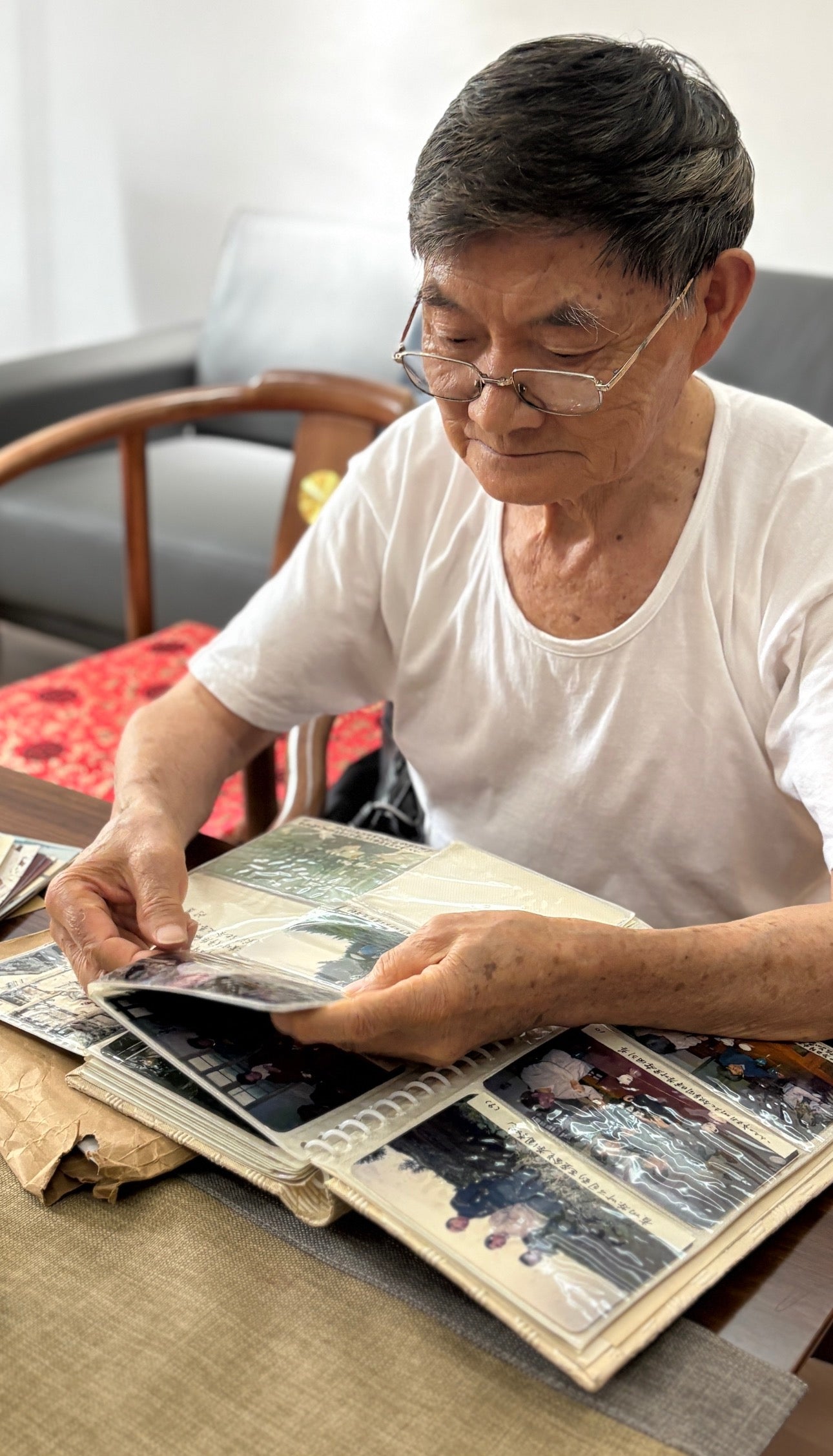
Qiu

Qiu, Wufeng Mountain, Enshi

Among all the names buried in Enshi's tea history, there's Wufeng Mountain Chama Tea Factory, once the biggest Yulu factory in the region, back in the 90s. Matsushita Satoshi came through more than once to learn, camera on his shoulder, and wrote China's steamed tea craft into his book. He wrote that Enshi Yulu doesn't lose to Japanese gyokuro.

The factory doesn't exist anymore. Neither does the tea, mostly. When we first heard about an apple-aroma Yulu from the old teacher who once ran Chama, we didn't quite believe it. After drinking this much tea, you learn that flavor claims like that are usually faint, more suggestion than substance.

Asking a retired master to come back and make tea again felt like too much to ask. We're glad we did. Fresh apple, dried apple, apple juice, all through the same cup, dry leaf straight to liquor, consistent from the first steep to the last. Layered like a French meal: nori and a briny freshness up front, then something in the air like cream, butter, black truffle, closing on apple, sweet-tart jam, a faint floral. Nothing thin about it.

We used to think Matsushita's line about Enshi Yulu not losing to gyokuro was old-era flattery. Tasting this one, we don't anymore. We're calling it "French Cuisine" Yulu, so the name won't get buried again. Finished by Qiu at Wufeng Mountain, Enshi.

Perfect moments for this tea

📖
When you want a story, not just a sip
This is a flavor that nearly disappeared and got found again. Drinking it feels like sitting in on a history being retold, not just quenching thirst. Good for when you want to slow down and actually pay attention to a cup of tea.
🍽️
Before or after a meal
The tea's own structure mirrors a full meal: florals to open, fruit-acid to whet the appetite, a dense savory main course, a sweet finish. It holds up next to food, doesn't get overpowered. Good for an actual sit-down meal, before or after.
🔎
When you want to taste it for what it is
The apple aroma and nori-briny savor here are their own thing, not a copy of anyone else's style. Drinking it feels like arriving at an answer. Good for serious tea study, when you want to sit with the structure of a flavor, not just drink past it.

How to brew

3g
Leaf
3g per 150ml
90°C
Water
194°F / 90°C
10s
Steep
First steep 10 seconds
+5s
Resteep
Add 5 seconds per round after

Keep the water just under a full boil. 194°F / 90°C protects the delicate apple and floral top notes.

Specifications

HarvestAugust 2026
Elevation1,100m
CultivarTaizi heirloom group cultivar, 50-year-old bushes
ProcessingSteamed kill-green, traditional Yulu shaping and polishing, hand-finished
FarmingOrganic, naturally grown, no synthetic pesticides or fertilizers
GardenWufeng Mountain, Enshi, Hubei, China
Cups per 50g~16 cups (3g per session)
CaffeineModerate, typical of steamed green tea

Common questions

Why is it called "French Cuisine" Yulu?+
Because of how the flavor unfolds, not because of anything French about the leaf. It moves through courses the way a full meal does: florals and freshness to open, apple and jam sweet-tartness to whet the appetite, then a dense, savory core of nori, brine, yogurt, and butter, closing on a clean sweetness. Most Yulu is a single note. This one has structure.
Where does the apple aroma come from?+
It's not an added flavor. This tea is made by a retired master who once ran Wufeng Mountain Chama Tea Factory, once the biggest Yulu factory in the region. The apple aroma is part of the craft passed down from that history, nearly lost when the factory closed and the tea stopped being made. We asked him to come back and make it again.
This is summer harvest. Doesn't spring tea usually taste better?+
Usually, yes, spring leaf is prized over summer. That's part of what makes this tea unusual: even as summer leaf, it holds this much depth and consistency across steeps. It's a fair question what spring leaf from the same hands would taste like.
Is this really comparable to Japanese gyokuro?+
The tea historian Matsushita Satoshi wrote that Enshi Yulu doesn't lose to Japanese gyokuro, after visiting Wufeng Mountain Chama Tea Factory to study its craft. That claim can sound like flattery until you taste a Yulu with real structure behind it. This one isn't trying to copy gyokuro. It's its own thing, apple, nori, brine, and cream, layered the way a full meal is layered.
$14.99